Abstract submission is open: 1 September - 15 November 2026
Notification of accepted abstracts: 15 December 2026
Full-text submission deadline: 15 February 2027
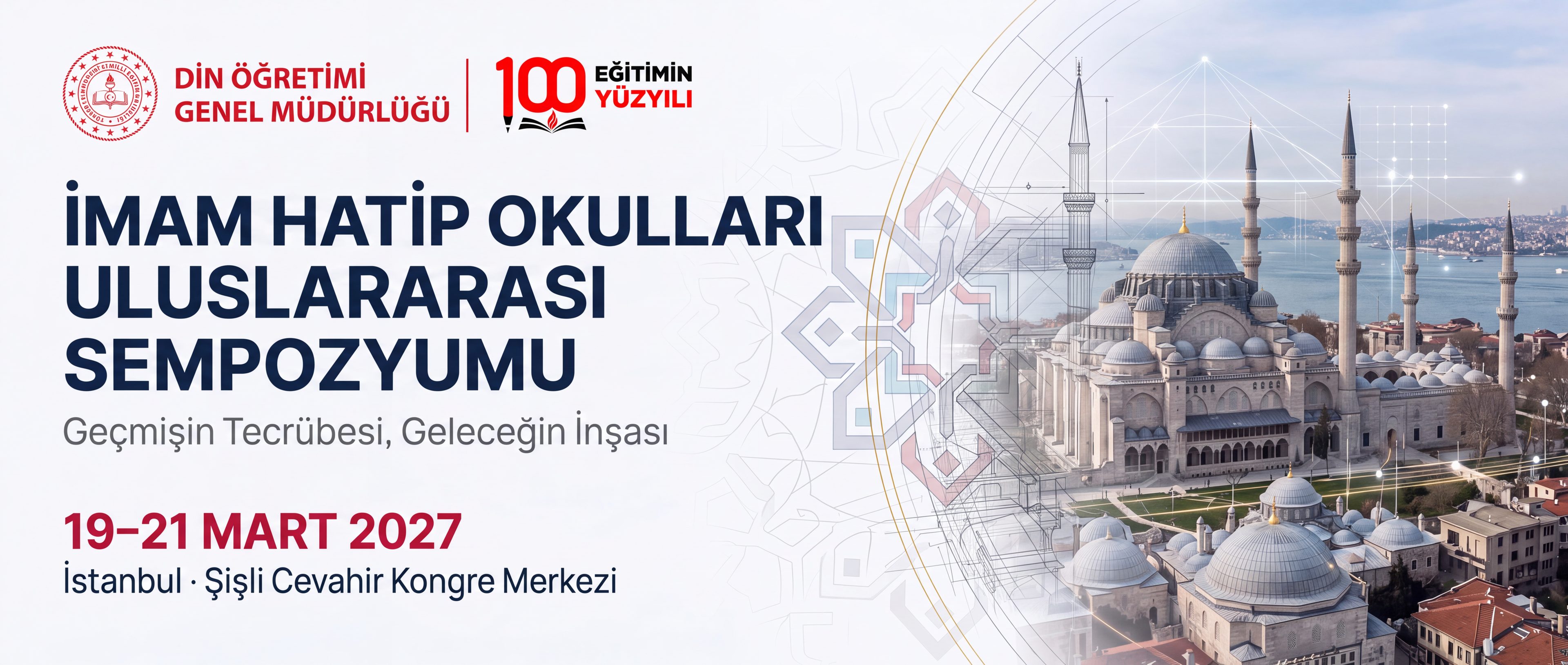
Symposium dates: 19-21 March 2027 • Istanbul Şişli Cevahir Congress Centre
Original papers are invited on 12 main themes and more than 70 sub-topics
Organisers: MoNE Directorate General of Religious Education, Ibn Haldun Univ., Istanbul 29 Mayıs Univ., ÖNDER, İHAMER

The Aim, Scope and Objectives of the Symposium

To analyse the experience inherited from the past with an academic perspective, to evaluate current practices from multiple angles and to develop applicable policy proposals for the future of imam hatip schools.

Aim

Aim of the Symposium

To address the historical development, educational philosophy, institutional memory, place within education policy, academic performance, social contributions and future perspectives of imam hatip schools through an interdisciplinary approach.

Scope

Scope & Interdisciplinary Approach

With contributions from academics, researchers, education administrators, teachers, postgraduate students and civil society representatives working in educational sciences, theology, history, sociology, psychology, public administration, political science, youth studies and cultural studies, the current state and future of imam hatip schools will be evaluated in the light of scientific data — in the context of changing approaches to education, digital transformation, artificial intelligence applications, internationalisation, values education and the pursuit of quality in education.

Objectives

Expected Contributions

  • Evaluating this deep-rooted educational heritage from a scientific perspective and documenting its historical experience.
  • Identifying the strengths and areas for development of the current situation.
  • Discussing the challenges encountered on an academic basis.
  • Developing a strategic vision for the future and applicable policy proposals.

Solidarity of the Public Sector, Universities and Civil Society

The symposium will be held in a spirit of collective wisdom and cooperation among public institutions, universities, civil society and research centres. In this respect it is a broad-participation platform that aims to develop the body of academic knowledge on imam hatip schools, to share practical experience and to discuss policy proposals for the future on a scientific basis.

“With their historical experience, social impact and distinctive position in the field of education, imam hatip schools are among the most important educational institutions of Türkiye. As one of the deep-rooted educational experiences of the Republican era, imam hatip schools have contributed to the education of millions of students since their foundation and have built up a significant body of achievement in religious education, academic development, culture, the arts, sport and social responsibility.”

— Symposium Application Guide, 2026-2027 (translated)

Important Symposium Dates

Every stage, from abstract submission to the symposium days.

01
Abstract Submission

Abstract Submission Period

1 September 2026 - 15 November 2026

Submission, through the EBA application system, of papers prepared with the official abstract template.

02
Evaluation

Notification of Accepted Abstracts

15 December 2026

Notification to authors of the abstracts accepted following the Scientific Committee’s evaluation.

03
Full Text

Full-Text Submission Deadline

15 February 2027

Preparation of accepted papers according to the official full-text template and upload to the application system.

04
Programme

Announcement of the Symposium Programme

1 March 2027

Announcement of the programme, including sessions, hall allocations and presentation times.

05
Symposium

Symposium Sessions

19-21 March 2027

Three days of symposium sessions at the Istanbul – Şişli Cevahir Congress Centre.

The 12 Main Symposium Themes

Original papers prepared within the 12 main themes and more than 70 sub-topics set out in the guide will be accepted.

Theme 01History & Philosophy

The History of Imam Hatip Schools

Historical processes, turning points and memory, from the pre-Republican madrasa and reform experience to the present day.

  • Dimensions of the Imam Hatip Model Reaching Back Before the Republic
  • The Law on the Unification of Education (Tevhîd-i Tedrisat), the Single-Party Era and Imam Hatip Schools
  • Imam Hatip Schools after the Transition to Multi-Party Politics
  • The 12 September Coup and Imam Hatip Schools
  • The 28 February Process and Imam Hatip Schools
  • Imam Hatip Schools from the Early 2000s to the Present
Theme 02Model & Character

Distinctive Features of the Imam Hatip Model

A human model that bridges tradition and the modern sciences, state oversight and the struggle against extremism.

  • Being Part of the General Education System
  • Originality in Terms of Aims and Functions
  • Its Position under State Supervision and Oversight in the Public Sphere
  • Balancing Traditional Heritage and Modern Education (Religious and Modern Sciences Side by Side in the Curriculum)
  • Building a Sound Understanding of Religion and Combating Extremism
  • The Qualities of the Individual the Imam Hatip Model Seeks to Raise
Theme 03Curriculum & Project Schools

Curriculum Diversity and Thematic Imam Hatip Models

Science, social science, arts, sports and international project schools; integration of the competency framework of the Türkiye Century Education Model.

  • The Emergence and Aims of Project Imam Hatip Schools
  • Advantages and Limits of the Thematic School Model
  • Programme Diversity: Science, Social Science, Arts and Sports Project Schools
  • International Imam Hatip High Schools: Education Diplomacy and Türkiye’s Experience in Religious Education
  • An Interdisciplinary Approach: Integrating the Natural Sciences and Theology in Imam Hatip Schools
  • Updating the Vocational Curriculum: Classical Texts and Contemporary Needs
  • Examples of Successful Practice
  • The Virtue-Value-Action Framework of the Türkiye Century Education Curriculum and Values Education in Imam Hatip Schools
  • The Imam Hatip Curriculum within the Competency Framework of the Türkiye Century Education Model
  • Foreign Language Teaching in Imam Hatip Schools
  • Arabic Teaching in Imam Hatip Schools: New Methods and Techniques
Theme 04Internationalisation

Models of Religious Education around the World and Imam Hatip Schools

Comparative global religious education, from the Balkans, Central Asia and the Islamic world to Muslim minority schools in the West.

  • Imam Hatip Schools as a Model for the Balkans, Central Asia and the Islamic World
  • A Comparison of Muslim Minority Schools in the West with Imam Hatip Schools
  • The Place of Religious Education in Modern Education Systems: Global Trends
  • A Comparison of Imam Hatip-Type Institutions Established in Different Countries
Theme 05Pedagogy

Vocational Religious Education in Imam Hatip Schools

Instructional technology, digital tools, the pedagogical quality of textbooks and teacher competencies.

  • Teaching Vocational Subjects; Instructional Technology (Methods/Techniques, Tools and Equipment, Visual, Audio and Digital Materials, etc.)
  • The Student Profile in Imam Hatip Schools: Quantity or Quality?
  • Personal and Professional Competencies of Vocational Subject Teachers in Imam Hatip Schools
  • Language, Content, Pedagogical Adequacy and Currency of Vocational Subject Textbooks
Theme 06Management & Climate

Institutional Capacity, Management and School Climate

Administrator and teacher profiles, spatial design, school culture and student-centred approaches to discipline.

  • Administrator and Teacher Profiles in Imam Hatip Schools: Leadership and Training
  • Physical Space Design and the Psychological Effects of Learning Environments
  • School Climate and Discipline Problems: Student-Centred Solutions
  • School Culture and Climate in Imam Hatip Schools
Theme 07Basic Education

Imam Hatip Middle Schools: A New Era in Basic Education and Qur’an Memorisation

The balance between academic achievement and religious education; sustainability analysis of the “Qur’an Memorisation alongside Formal Education” project.

  • The Balance between Academic Achievement and Religious Education in Imam Hatip Middle Schools
  • The “Qur’an Memorisation alongside Formal Education” Project: Implementation and Sustainability Analysis
  • Religious Education at an Early Age: Child Development and Pedagogical Approaches
Theme 08Higher Education

Transition to Higher Education and Continuity with Faculties of Theology

The post-“coefficient” era, graduates’ university preferences and curricular continuity with faculties of theology.

  • University Preferences and Career Orientations of Imam Hatip High School Graduates
  • Imam Hatip–Theology Integration: Continuity of Curriculum and Training
  • Academic Achievement in the Post-“Coefficient” Era: New Opportunities and Expectations
  • The Question of Alignment and Integration with Higher Religious Education
Theme 09Society & Culture

The Socio-Cultural Impact of Imam Hatip Schools: Social Responsibility, Volunteering and Community Service

Identity formation, social mobility, the “Schools of Goodness”, mosque–school integration and intellectual production.

  • Being an “Imam Hatip Graduate”: Identity Formation and Social Perception
  • Family, Community and School Relations
  • Imam Hatip Schools as a Means of Social Mobility and Status Attainment
  • Graduates’ Career Paths and Social Positions
  • Imam Hatip Graduates in Politics, Academia, Literature, the Arts and the Bureaucracy
  • Alumni–School Relations: Institutionalising a Sense of Belonging and Tracking Careers
  • “Schools of Goodness”: Social Responsibility Projects of Imam Hatip Students
  • Mosque–School Integration: New Strategies in Vocational Practice Training
  • Sensitivity to Local Problems: The Role of Imam Hatip Schools in Neighbourhood and Urban Culture
  • Imam Hatip Schools in Culture, the Arts, Thought and Intellectual Production
Theme 10Civil Society

The Civil Society–Public Sector Cooperation Model

The tradition of educational foundations, parent–school associations, the experiences of ENSAR, İlim Yayma and ÖNDER, and guidance services.

  • The Contribution of Parent–School Associations and Voluntary Organisations to School Management
  • The Foundation Tradition in Education: The Experiences of ENSAR, İLİM YAYMA and ÖNDER
  • The Role of Civil Society Organisations in Social Activities and Guidance Services
Theme 11Future & Vision

The Future Perspective and Vision of Imam Hatip Schools

AI-supported religious education, the Türkiye Century Education Model, quality and accreditation, the religious subject in the digital age.

  • Debates on Quantity and Quality
  • The Relationship and Balance between Enrolment Capacity and Demand
  • Girls in Imam Hatip Education
  • The Relationship between Imam Hatip High Schools and Higher Education
  • The Transformation of Religious Authority in the Process of Digitalisation
  • AI-Supported Religious Education: Opportunities and Risks
  • Challenges of Religious Education and Ways Forward
  • Quality and Accreditation in Religious Education
  • Local Identity in the Face of Globalisation
  • Training a New Generation of Vocational Subject Teachers
  • Imam Hatip Programmes in the Context of the Türkiye Century Education Model
  • Youth Subcultures and Imam Hatip Schools: The Position of the Religious Subject in the Digital World
  • Strengths, Risks and Strategic Recommendations
  • The Human Model of the Future and Institutional Vision
  • Local Values and Global Responsibility in the Türkiye Century Education Model
Theme 12Academic Analysis

An Analysis of Academic Studies on Imam Hatip Schools

A bibliographic survey of master’s and doctoral theses, articles, papers, books, films and documentaries.

  • Master’s and Doctoral Theses
  • Academic Articles and Papers
  • Books, Films and Documentaries

Symposium Committees

The Honorary Board, Scientific Committee and Organising Committee, made up of representatives of the Ministry of National Education, the Presidency of Religious Affairs, universities and civil society organisations.

Prof. Dr. Yusuf TEKİN

Minister of National Education
Ministry of National Education

Prof. Dr. Safi ARPAGUŞ

President of Religious Affairs
Presidency of Religious Affairs (Diyanet)

Dr. Tayyar ALTIKULAÇ

Chair of the Board of Trustees
Istanbul 29 Mayıs University

Prof. Dr. Hayreddin KARAMAN

Retired Faculty Member
Marmara University Faculty of Theology

Prof. Dr. İrfan GÜNDÜZ

Chair of the Board of Trustees
Ibn Haldun University

Necmeddin Bilal ERDOĞAN

Deputy Chair of the Board of Trustees
Ibn Haldun University

Abdullah CEYLAN

President
ÖNDER Imam Hatip Alumni Association
Prof. Dr. Abdullah KAHRAMAN
Kocaeli University
Prof. Dr. Abdurrahman ÖZDEMİR
Fatih Sultan Mehmet Vakıf University
Prof. Dr. Ahmet EKŞİ
Kocaeli University
Prof. Dr. Ahmet İshak DEMİR
Presidency of Religious Affairs (Diyanet)
Dr. Ahmet İŞLEYEN
Directorate General of Religious Education
Assoc. Prof. Dr. Ahmet KOÇ
Istanbul University
Prof. Dr. Ahmet KOÇ
Istanbul 29 Mayıs University
Assoc. Prof. Dr. Ahmet MEYDAN
Marmara University
Prof. Dr. Ahmet TÜRKAN
Necmettin Erbakan University
Prof. Dr. Ahmet YÜCEL
Istanbul 29 Mayıs University
Prof. Dr. Ali BARDAKOĞLU
Istanbul 29 Mayıs University
Prof. Dr. Ali ERBAŞ
Istanbul 29 Mayıs University
Prof. Dr. Alican DAĞDEVİREN
Istanbul Medeniyet University
Prof. Dr. Atilla ARKAN
Ibn Haldun University
Prof. Dr. Ayhan ÖZ
Marmara University
Assoc. Prof. Dr. Celile Eren ÖKTEN
Ministry of National Education
Prof. Dr. Cihad DEMİRLİ
Ministry of National Education
Assoc. Prof. Dr. Emine KESKİNER
Marmara University
Assoc. Prof. Dr. Enver Osman KAAN
Presidency of the Diyanet Academy
Dr. Gülsüm PEHLİVAN AĞIRAKÇA
Istanbul 29 Mayıs University
Prof. Dr. Hacı Mehmet GÜNAY
Ibn Haldun University
Prof. Dr. Hacı Yusuf ACUNER
Recep Tayyip Erdoğan University
Prof. Dr. Halil İbrahim SAĞLAM
Istanbul 29 Mayıs University
Res. Asst. Hasan Hüseyin MAMAK
Istanbul 29 Mayıs University
Assoc. Prof. Dr. Hatice BOYNUKALIN ŞENKARDEŞLER
Presidency of Religious Affairs (Diyanet)
Prof. Dr. İbrahim Kâfi DÖNMEZ
Istanbul 29 Mayıs University
Prof. Dr. İlyas ÇELEBİ
Istanbul 29 Mayıs University
Prof. Dr. İrfan AYCAN
Ankara University
Assoc. Prof. Dr. İrfan ERDOĞAN
Necmettin Erbakan University
Prof. Dr. İsmail KARA
Istanbul 29 Mayıs University
Prof. Dr. İsmail Safa ÜSTÜN
Marmara University
Assoc. Prof. Dr. Kasım KOCAMAN
Bilecik Şeyh Edebali University
Prof. Dr. Mustafa SİNANOĞLU
Istanbul 29 Mayıs University
Prof. Dr. Mürteza BEDİR
Istanbul 29 Mayıs University
Dr. Necdet SUBAŞI
Ministry of National Education
Prof. Dr. Özcan Erkan AKGÜN
Ibn Haldun University
Prof. Dr. Özcan HIDIR
Istanbul Sabahattin Zaim University
Prof. Dr. Salime Leyla GÜRKAN
Istanbul 29 Mayıs University
Assoc. Prof. Dr. Umut KAYA
Marmara University
Prof. Dr. Yaşar DÜZENLİ
Istanbul University
Prof. Dr. Zekeriya GÜLER
Istanbul 29 Mayıs University


Ahmet YAPICI
MoNE Directorate General of Religious Education
Dr. Muhammet ÇELİK
Imam Hatip Research Centre (İHAMER)
Dr. Yunus Vehbi KARAMAN
Imam Hatip Research Centre (İHAMER)
Arif MUŞTU
ÖNDER Imam Hatip Alumni Association
Prof. Dr. Ahmet EKŞİ
Imam Hatip Research Centre (İHAMER)
Prof. Dr. Ahmet TÜRKAN
Imam Hatip Research Centre (İHAMER)
Assoc. Prof. Dr. Ahmet MEYDAN
Imam Hatip Research Centre (İHAMER)
Assoc. Prof. Dr. Ahmet KOÇ
Imam Hatip Research Centre (İHAMER)
Assoc. Prof. Dr. Umut KAYA
Imam Hatip Research Centre (İHAMER)
Assoc. Prof. Dr. Özkan ÖZTÜRK
Imam Hatip Research Centre (İHAMER)
Dr. Zeynep OLGUN
MoNE Directorate General of Religious Education
Fatih MALTEPE
MoNE Directorate General of Religious Education
Hale KARABULUT
MoNE Directorate General of Religious Education
Dr. Ferhat TOPRAK
MoNE Directorate General of Religious Education
Emine ERDOĞAN
Imam Hatip Research Centre (İHAMER)
Sultan TEKİN
Imam Hatip Research Centre (İHAMER)
Besim Enes ALPER
Ibn Haldun University
Mehmet Buğra SEZER
Ibn Haldun University
Dr. Yusuf ŞİMŞEK
MoNE Directorate General of Religious Education
Bilal OĞUZ
MoNE Directorate General of Religious Education
Enes KAVAS
Imam Hatip Research Centre (İHAMER)
Muhammed Furkan TATLI
Imam Hatip Research Centre (İHAMER)

Official Documents and Application

The guide, templates, declaration forms and promotional files in one place.

Application Guide1
PDF1.1 MB
Application Guide
Scope, committees, calendar and paper topics of the symposium. 11 pages.
Paper Templates2
DOCX19 KB
Abstract Template
Editable Word template for preparing the paper abstract.
DOCX25 KB
Full-Text Template
Official template for the full text, headings, tables and references.
Forms and Declarations4
DOCX15 KB
Annex 1 · Copyright Agreement
Copyright agreement with author and paper details.
DOCX12 KB
Annex 2 · Conflict of Interest Declaration Form
Declaration of the corresponding author regarding conflicts of interest.
DOCX12 KB
Annex 3 · Declaration on the Use of Artificial Intelligence
Declaration on the use of artificial intelligence in preparing the study.
DOCX12 KB
Annex 4 · Contact Details Form
Form for the authors’ contact, institution and ORCID details.
Poster and Promotion3
PDF14.0 MB
Official Symposium Poster · PDF
Print-ready PDF version of the poster published by the Directorate General.
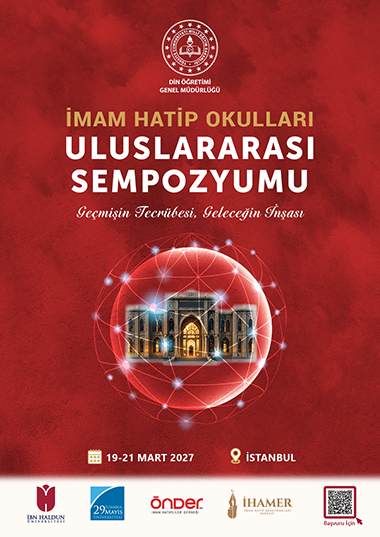
The official symposium poster of the Directorate General
Official Symposium Poster · JPG
Image version of the official poster.
Promotional poster of the International Symposium on Imam Hatip Schools
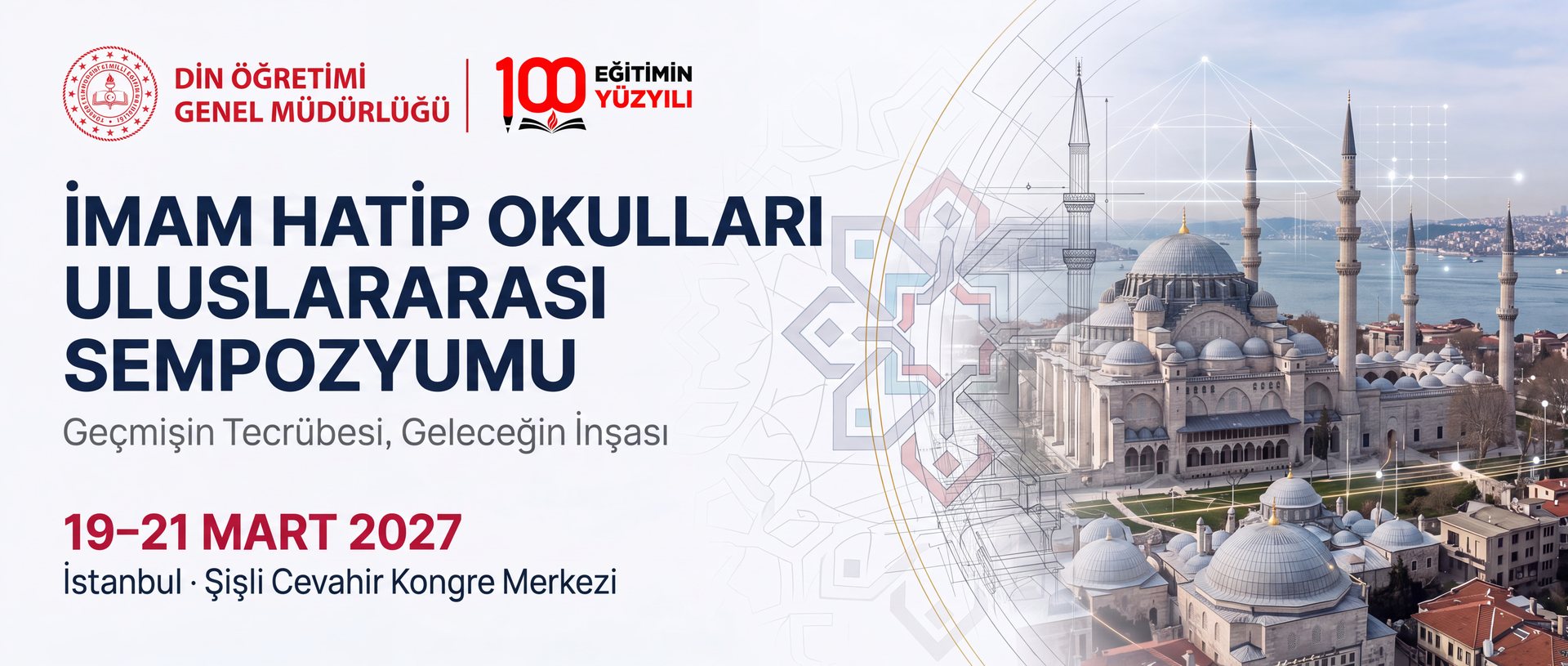
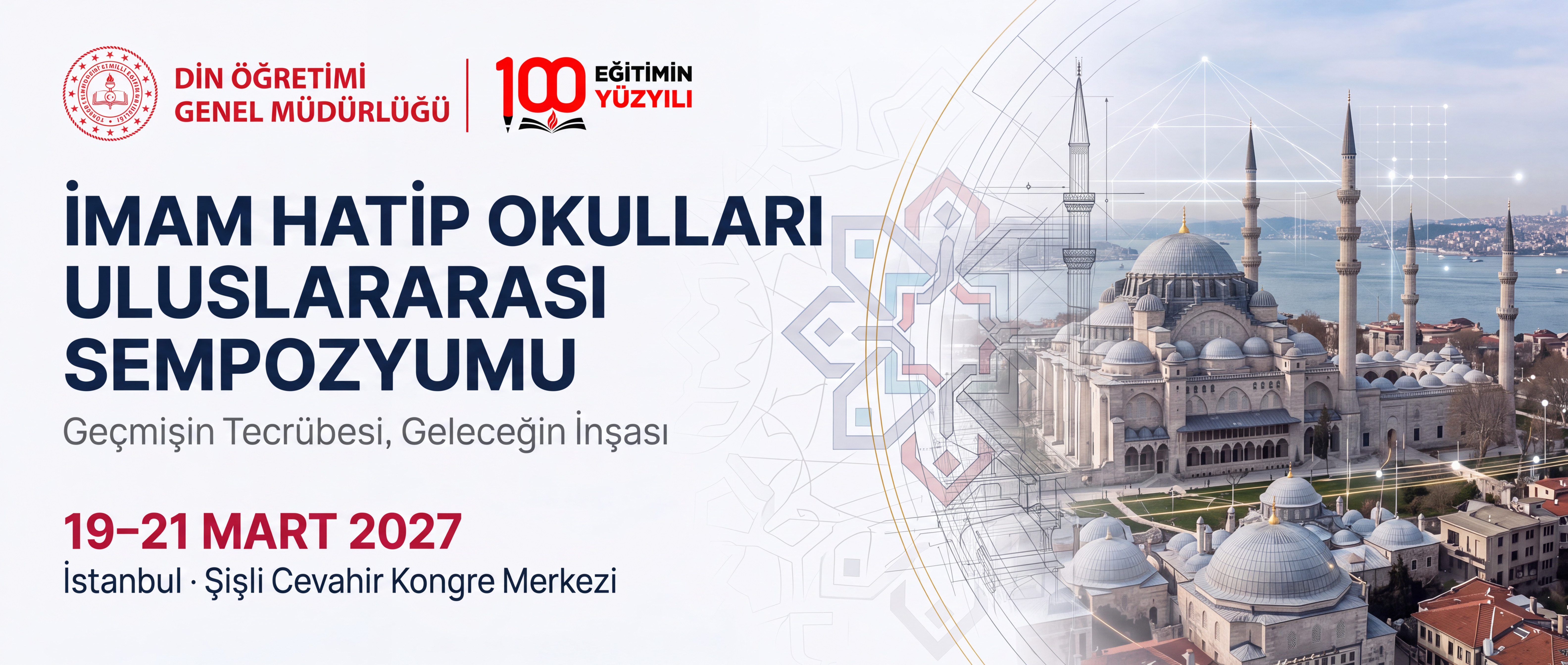
Symposium Promotional Banner (Landscape)
Landscape promotional image for web and presentations; high resolution (6336 × 2688 px).

Source: Directorate General of Religious Education symposium page ↗ · Compiled on 19 September 2026.All documents are in Turkish. · Download All Files · ZIP

Accepted Paper Abstracts

Abstracts accepted following the Scientific Committee’s evaluation will be published in this section and can be searched by title, author, keyword and theme.

Accepted paper abstracts will be published here from 15 December 2026.Abstracts are received through the application system between 1 September 2026 - 15 November 2026.

Contact and Venue

Reach the symposium secretariat and browse the answers to frequently asked questions.

Symposium Secretariat

Official E-mail

dogm.ogrenmesurecleri@meb.gov.tr

For paper procedures and academic enquiries.

Official Web Page

https://meb.ai/xafwGh

Announcement page of the Directorate General of Religious Education, Ministry of National Education.

Venue and Dates

Istanbul – Şişli Cevahir Congress Centre

19-21 March 2027

Transport and hall details will be announced together with the symposium programme on 1 March 2027.

Frequently Asked Questions

Academics, researchers, education administrators, teachers, postgraduate students and civil society representatives working in educational sciences, theology, history, sociology, psychology, public administration, political science, youth studies, cultural studies and related fields may apply by submitting an abstract.

Applications are received through the EBA application system designated by the Directorate General. Teachers and administrators with a MEBBİS password apply via the MEBBİS login; participants without a MEBBİS password use the Conference Paper Submission Form in the system to upload their paper in PDF format (max. 10 MB). Both links open from the “Submit a Paper” button on this page. The application system is in Turkish.

The Abstract Template and the Full-Text Template published by the Directorate General must be used. The Copyright Agreement (Annex 1), Conflict of Interest Declaration Form (Annex 2), Declaration on the Use of Artificial Intelligence (Annex 3) and Contact Details Form (Annex 4) can be downloaded from the Official Documents section. All documents are in Turkish.

Abstracts are submitted between 1 September and 15 November 2026. Accepted abstracts are announced on 15 December 2026; the full-text deadline is 15 February 2027 and the programme is announced on 1 March 2027. The symposium takes place on 19-21 March 2027.

The language of the symposium is Turkish. It will be held at the Istanbul – Şişli Cevahir Congress Centre.

You can reach the symposium secretariat at dogm.ogrenmesurecleri@meb.gov.tr. Official announcements are published at https://meb.ai/xafwGh.

INTERNATİONAL SYMPOSİUM ON IMAM HATİP SCHOOLS

Submit a Paper

Applications are received through the EBA application system of the Directorate General.

<strong>PDF</strong> file format<strong>10 MB</strong> maximum file size<strong>1 September 2026 - 15 November 2026</strong> abstract submission periodDownload templates ↗
Choose your application route

Which route should I choose?

Teachers and administrators of the Ministry of National Education apply with their personal MEBBİS login; university staff, postgraduate students and all other participants apply through the Conference Paper Submission Form. The official application system is in Turkish.

International Symposium on Imam Hatip Schools (2026-2027) — The Experience of the Past, Building the Future